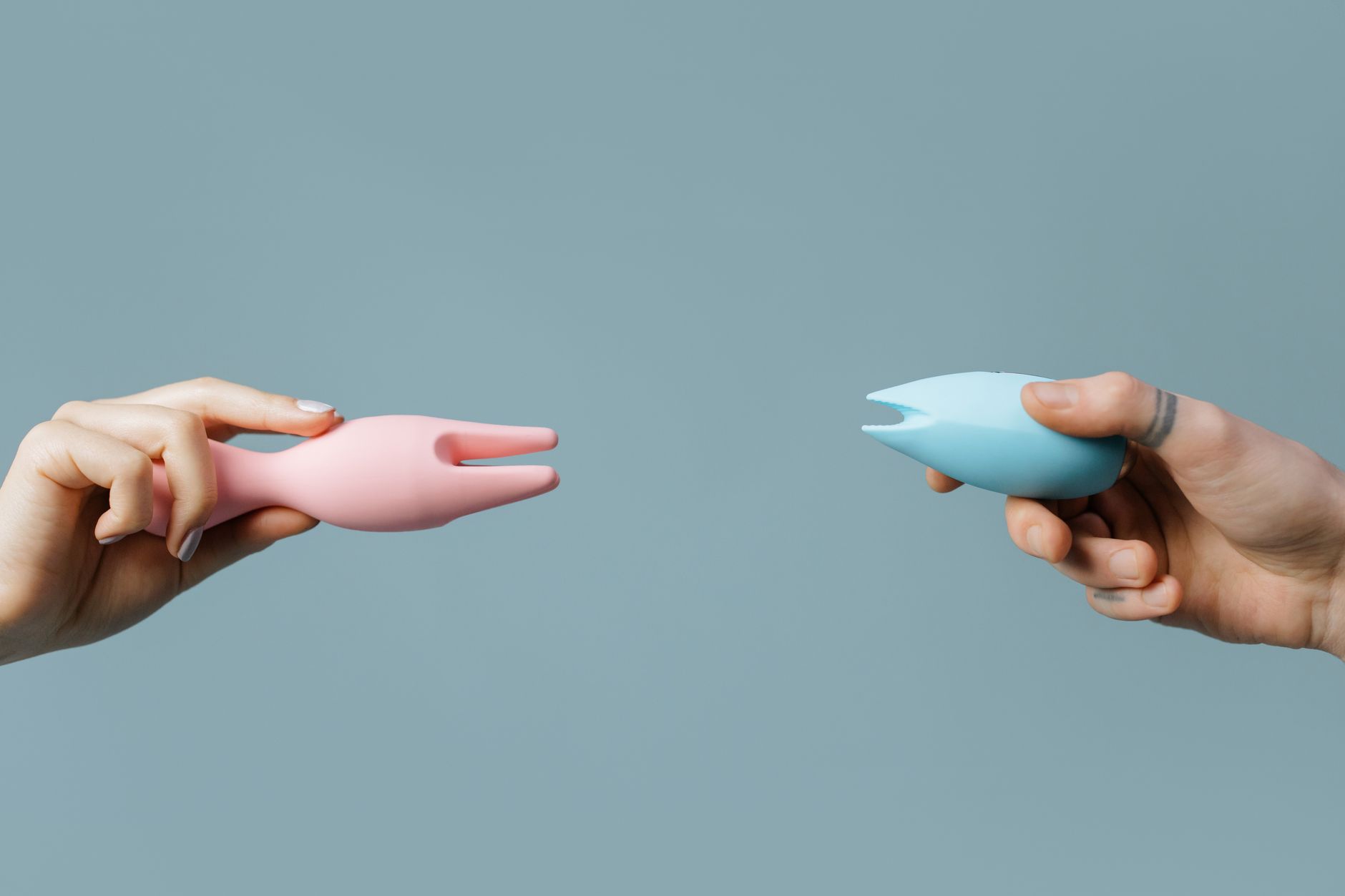
Let's be real: vibrators aren't all the same sensation
If you've tried multiple toys, you probably already know this. A bullet feels nothing like a wand. A rabbit doesn't feel like a clitoral suction toy. But here's what most people don't understand: the reason these feel so different comes down to how they're stimulating your nerves, not just the pattern or speed. And lemon vibrators—specifically the suction-based design Shop Lemon Sex Toy offers—work on an entirely different principle than traditional vibrators. That's not marketing language. That's neurology.

Photo by cottonbro studio on Pexels
How vibration actually works on the clitoris
Most vibrators—your bullet, your wand, your standard clitoral vibrator—work through oscillation. The toy moves back and forth (or in circles) at high speed, typically 3,000 to 10,000 vibrations per minute depending on the model. This creates micro-friction against the tissue, which stimulates nerve endings through direct mechanical stimulation.
The problem: if your tissue is sensitive (whether from hormonal changes, recovery, or just personal anatomy), this constant friction can feel overwhelming, numb out quickly, or even become uncomfortable. The sensation also fatigues—your nerve endings adapt to consistent stimulus, which is why you sometimes feel like you need to turn the vibration up to the highest setting to get anywhere.
Direct friction also means you're relying on consistent, repetitive input. That works great for some bodies. It works terribly for others.
What suction-based lemon vibrators actually do
Here's where lemon clitoral vibrators diverge completely. Instead of friction-based vibration, they use rhythmic suction. The toy creates a gentle seal around the clitoris and then pulses—creating waves of pressure and release rather than side-to-side movement.
This stimulates the clitoris through a different pathway: indirect pressure combined with rhythmic pulsing. Think of it less like rubbing and more like a chain reaction. The suction creates a pressure zone that engages not just the surface nerve endings but the deeper nerve clusters around the clitoral body. Because the motion is vertical (suction and release) rather than horizontal (vibration), it bypasses the adaptation problem that plain vibration hits.
In clinical terms, it's lower-frequency stimulation with higher-amplitude sensation. That translates to: your nerves stay engaged longer, the feeling doesn't numb out as quickly, and many people report that orgasms feel more intense or arrive more reliably.
Why the sensation feels so different
Three concrete differences make lemon vibrators distinct:
1. Pressure waves versus micro-friction. Vibration creates thousands of tiny movements per minute. Suction creates bigger, slower pressure waves. Your nervous system processes these differently. Some people describe vibration as "buzzy" and suction as "deep" or "pulling." That's not subjective—it's neurologically distinct input.
2. Adaptation is slower. Because the stimulus is less repetitive and more varied in its rhythm, your nerve endings don't adapt (habituate) as quickly. You stay sensitive longer without needing to increase intensity.
3. Broader nerve engagement. The clitoris isn't just the external button you can see. It's a complex network—the glans, the shaft, and the clitoral body that extends inside your body. Suction engages more of this network at once, while vibration tends to focus on the surface.
Why this matters for different bodies
If you have sensitive tissue, lemon vibrators often feel better because suction is gentler than friction. You're not grinding against tissue—you're gently pulling. If you've been numb or struggling to feel sensation, suction's broader nerve engagement often cuts through that faster than vibration alone.
If you recover slowly or need longer warm-up time, suction's slower adaptation curve means you don't hit the wall where you suddenly need maximum settings just to feel anything.
That said, this doesn't mean suction is universally "better." Some people find vibration more intuitive or satisfying. Some prefer the directness of friction. The real insight is that they're genuinely different tools, and knowing the difference helps you choose what actually fits your body instead of guessing.
How lemon clitoral vibrators compare to traditional vibrators
Let's be specific. A traditional bullet vibrator delivers consistent, high-frequency vibration in a concentrated area. Fast. Repetitive. Reliable for many people. But over time, especially if you're using it regularly, that repetition can lead to desensitization.
A wand vibrator covers more surface area and usually has stronger vibration, but the trade-off is less precision. You're stimulating a wider zone, which some people love and others find too diffuse.
A lemon vibrator sits in a different category entirely. It's not trying to compete on power or speed. It's offering a completely different type of sensation through suction and pulsing. This makes it particularly useful if you're rebuilding sensation after long-term vibrator use or if traditional vibration has stopped feeling effective. That's why many people use both—a vibrator for quickness, a lemon sucker for depth and sustainability.
The comfort factor matters more than you think
Honestly, this is the part nobody talks about. Beyond the raw sensation difference, lemon vibrators often feel more comfortable during extended use. Because they're not relying on friction, your skin doesn't get irritated the way it sometimes does with traditional vibrators. You're not pressing and grinding—you're creating a gentle seal.
If you've ever felt soreness or sensitivity after using a vibrator for a while, it's probably because friction adds up. You don't get that same cumulative irritation with suction-based lemon clitoral vibrators. That means you can actually enjoy longer sessions without discomfort, which paradoxically makes it easier to relax and find your pleasure.
Testing the difference yourself
If you're curious but skeptical, here's the honest reality: suction-based toys like the lemon clitoral vibrators from Shop Lemon Sex Toy feel noticeably different on first use. You'll know within the first 30 seconds if the sensation appeals to you. It's not subtle.
Start on a lower setting. Lemon vibrators often feel more intense than their pattern number suggests, because suction engages more nerve pathways at once. Build up slowly. The learning curve is short—most people adjust within one or two uses.
Pay attention to how long sensation stays consistent. Can you feel the same level of pleasure 10 minutes in as you did at the start? With suction, often yes. That's the difference between a toy that works for 5 minutes and one that keeps working.
People also ask
Is a lemon vibrator better than a regular vibrator?
Not objectively. They're different tools. A lemon clitoral vibrator works better for some bodies and some situations—particularly if you need gentler pressure, longer sensation sustainability, or broader nerve engagement. Traditional vibrators work better for people who love intensity and quick results. The right toy is the one that matches your body's actual needs, not the one with the best marketing.
Can you use a lemon vibrator every day?
Yes, and many people do. Because suction doesn't create friction-based irritation the way vibration can, most people experience less desensitization with daily use. That said, your body will still adapt to any consistent stimulus over months. Rotating between sensation types (suction one day, vibration another) or taking breaks keeps your pleasure response fresher longer.
Do lemon vibrators take longer to work?
Not necessarily. Some people orgasm faster with suction because it engages more nerve pathways at once. Others take a few sessions to adjust to the sensation. The key is not comparing it to your vibrator—they're different. Give yourself permission to learn a new sensation without measuring it against your old experience.
Why does my lemon vibrator feel different than my partner's?
Variation in clitoral anatomy is enormous. The size, shape, and positioning of your clitoris differs from your partner's, which means the same toy interacts with your nerve endings differently. Combined with differences in sensitivity, hormones, and arousal, you'd expect very different experiences. That's normal. What works perfectly for one person might feel weird for another.
Can I use a lemon sucker if I have a hormonal IUD?
Yes. While hormonal IUDs can dampen sensation or arousal for some people, that's not a contraindication for using suction-based toys. In fact, many people with IUDs find that the broader nerve engagement of lemon clitoral vibrators works better than traditional vibration for cutting through reduced sensitivity. Start on a lower intensity and adjust to your comfort level.
What's the difference between lemon vibrators and other suction toys?
Design details matter. Some suction toys use harder pulsing patterns that feel intense immediately. Lemon vibrators typically offer a range of patterns and intensities, which means you can dial in what actually works for your body. The seal quality also varies—a good suction toy maintains consistent pressure, while cheaper versions lose suction and feel inconsistent. That's why the engineering matters.
The bottom line
Lemon vibrators feel different because they work differently. Instead of friction-based vibration, they use rhythmic suction to create pressure waves that engage your clitoris through an entirely different pathway. This results in sensations that feel deeper, last longer, and often adapt more slowly than traditional vibration.
That doesn't make them universally better. It makes them genuinely different. And if traditional vibrators have stopped working for you, or if friction-based stimulation feels uncomfortable, or if you simply want to experience pleasure in a new way, understanding this difference helps you choose the right tool.
Your pleasure matters. That means using toys that actually match your body and your needs, not the ones that looked good in a photo. If you're curious about whether lemon clitoral vibrators might be your thing, start with low expectations and genuine curiosity. Let your body tell you what feels right. If you have questions about which lemon vibrator might be best for your specific situation, we're here to help at /contact.