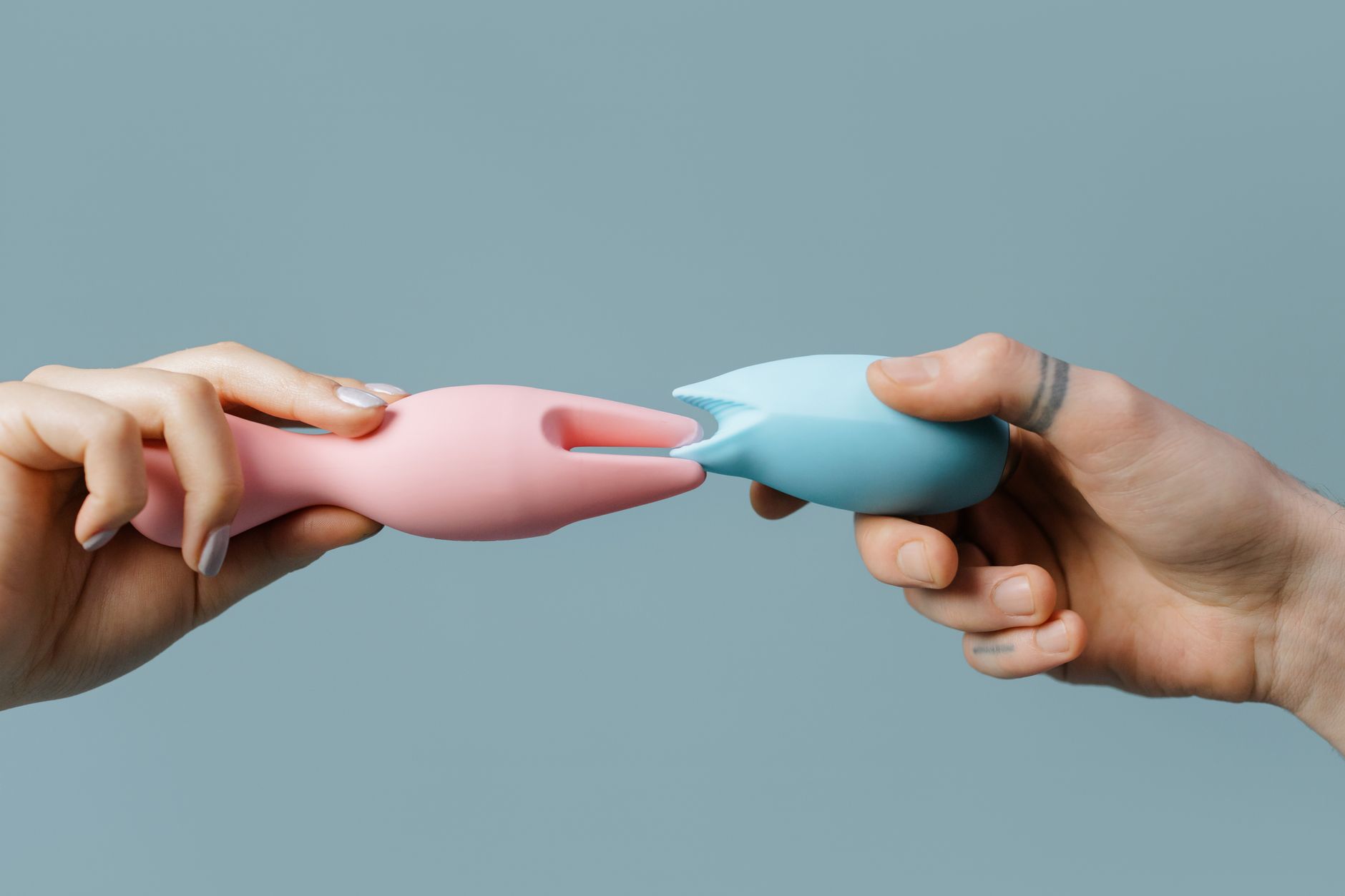
Let's be real about reconnection
Here's what nobody tells you: reconnecting with your partner after emotional drift isn't a weekend thing. It's not even a month thing for most couples. And trying to force it on an imagined timeline is exactly what tanks the whole project.
You and your partner might be ready to rebuild. You might both want it. And then your body says, "Not yet," because arousal lives in trust, and trust doesn't reset just because you've decided to try again.
Why reconnection stalls in the body
Emotional distance and sexual arousal are braided together. When couples have spent months or years not touching, not talking, or tiptoeing around hurt, the nervous system remembers. Your body doesn't trust the signal yet, even if your mind does.
This isn't a sign you're broken. It's a sign you're paying attention to real internal feedback. And that's actually the foundation you need to rebuild from.
For many couples I work with, the gap between "we want to reconnect" and "my body is ready for sex" can be weeks or months. During that gap, most people either give up or push through, both of which backfire. What you actually need is a middle path: a way to explore touch and pleasure that doesn't demand penetration, doesn't require you to fake arousal, and actually builds trust back into your nervous system.
That's where lemon clitoral vibrators come in. Not as a magic fix, but as a tool for exploring sensation without the pressure of traditional sex.
The role of external stimulation in slow reconnection
When emotional distance has created sexual stalling, many couples skip straight to foreplay in the traditional sense. But if arousal isn't there yet, that foreplay still lands as obligation. It still requires performance.
External stimulation through a clitoral vibrator is different. It's about discovering what feels good right now, separate from what used to feel good or what "should" feel good. A lemon vibrator lets you take your time without anyone waiting for the next step.
For partners with vulvas especially, this matters. Clitoral arousal takes longer when you're not fully relaxed. Lemon adult toys, designed for suction and external stimulation, work with your natural arousal rhythm instead of against it. You're not racing toward penetration. You're just exploring sensation.
If your partner is also present, they can watch, be near you, hold you. But the focus is entirely on your pleasure, your timeline, your body. That's not selfish. That's the opposite of the pressure-based sex that created the distance in the first place.
Starting with zero expectations
Here's what I tell couples rebuilding from emotional distance: your first session with a lemon vibrator shouldn't have a goal. Not orgasm, not arousal, not "it should feel like old times." The goal is sensation and feedback.
Set aside 20-30 minutes when you're genuinely rested and not rushed. No performance pressure. No expectation that this leads to sex. You might use the Lemon on low settings just to feel what you can feel right now. Maybe nothing happens. Maybe you feel nothing. That's data. Your body's telling you exactly where you are.
If you're with a partner, they can be nearby. Reading, present, available. Not watching you like it's a show. Just... there. That presence, without demand, actually rebuilds safety. Over weeks, as you use lemon vibrators in this low-pressure way, your nervous system starts to register that touch can happen without threat.
The practical setup for couples rebuilding slowly
Honestly? The setup matters more than the vibrator itself.
Create privacy that feels genuine. Not just physical privacy, but emotional space where neither of you needs to perform. If your partner is in the room, position yourself so they're there but not staring. You need to focus on your own sensation, not their reaction.
Use lubrication. When you're rebuilding arousal, your body might not produce enough natural lubrication. That's not failure. Water-based lube means you're not fighting your body's current state. You're working with it.
Start at the lowest intensity. Lemon vibrators have multiple settings for a reason. When you're just reconnecting, low intensity lets you feel subtle sensation and pleasure without overstimulation. You can always go higher later.
Build frequency, not duration. Short, regular sessions rebuild arousal better than long, sporadic ones. Three times a week for 15 minutes does more for your nervous system than one weekly hour-long session.
Keep communication simple. Not play-by-play during. But after, 30 seconds of honesty: "That felt good," or "I felt disconnected," or "I need more time." Nothing complex. Just truth.
When your partner is involved
If your partner is present while you're using a lemon clitoral vibrator, that changes the dynamic in a good way if you set it up right.
They're not there to be aroused or to move toward their own pleasure. They're there to witness your reconnection with your own body. That's different than couples' sex. There's no reciprocal pressure. One person is exploring. One person is present.
For partners used to emotional distance, this ritual actually rebuilds intimacy faster than traditional sex. You're letting them see you vulnerable and curious. You're taking pleasure seriously. You're not performing for them. You're doing this for yourself while they hold space.
Over time, as arousal returns and trust rebuilds, that presence can shift. But early on, it's about your partner learning that your pleasure matters independent of theirs. That's foundational for any couple rebuilding from distance.
What slow reconnection timeline actually looks like
Week 1-2: You're exploring sensation with a lemon vibrator. No orgasm goal. Body feels disconnected or numb. That's normal.
Week 3-4: You start noticing sensation. Maybe a subtle pulse of pleasure. Maybe not. You're building a rhythm of regular use. Your nervous system is starting to associate this time with safety, not threat.
Week 5-8: Arousal starts returning. Not like it used to. More fragile. But it's there. You might orgasm. You might not. Both are fine.
Week 8+: Trust continues deepening. Your body is remapping pleasure as something safe, something that belongs to you. At this point, you and your partner might begin adding other touch, other intimacy, because the foundation is actually solid now.
This timeline isn't universal. Some couples move faster. Some need longer. The point is: reconnection is a process, not an event. And lemon vibrators work specifically because they don't demand you rush it.
The mental shift that makes this work
Here's the thing that changes everything: you have to genuinely accept that reconnection doesn't have a deadline.
Most couples trying to rebuild after distance are running on shame and urgency. "We should be past this by now." "Normal couples don't need this long." "Something's wrong if arousal hasn't returned." All of that thinking works against you.
What actually works is this: your body's timeline is valid. Your need for slow rebuild is not a problem to solve quickly. It's an invitation to build something more honest and aware than what was there before.
When you use lemon sexual toys with that mindset, everything shifts. You're not checking boxes. You're actually exploring what pleasure can be when it's based on truth instead of habit.
FAQ: Questions about reconnecting with lemon vibrators
How long should I wait between sessions?
Three to four times a week is ideal for rebuilding arousal. Your nervous system needs frequency to rewire trust. But listen to your body. If you need a week off, take it. Consistency matters more than speed.
What if I feel nothing when I use a lemon vibrator?
That's completely normal during reconnection. Emotional distance numbs your body's signals. Keep using it anyway, at low intensity, without expecting feeling to return immediately. Some couples need 4-6 weeks before sensation returns noticeably. Your body will wake up.
Should my partner be there while I use it?
That depends on your comfort and what feels safe. Some couples rebuild faster with the partner present but at a distance. Some need complete solo time first. Try both. There's no wrong answer.
Can we use a lemon vibrator during partnered sex?
Yes, but not yet if you're in early reconnection. Wait until arousal is consistently returning and trust feels solid. Then, if you want to add it to partnered sex, it can deepen pleasure. But don't jump there to try to speed up the reconnection process.
What if my partner doesn't understand why this is taking so long?
That conversation is separate from the vibrator. You might need a couples' therapist to help your partner understand that emotional reconnection has a biological timeline. Pushing the body to perform faster than it can creates more distance, not less.
Does using a vibrator alone mean I'm not trying hard enough as a couple?
Absolutely not. In fact, it's the opposite. You're taking responsibility for your own reconnection with pleasure instead of putting that burden on your partner. That's advanced work.
The honest bottom line
Reconnecting after emotional distance is slow work. Your body needs time to trust again. And lemon vibrators aren't going to speed that up unnaturally. What they do is give you a way to explore pleasure on your actual timeline, without performing, without forcing, without the pressure of traditional sex.
That's not a workaround. That's exactly what reconnection actually requires.
If you're in this space right now, with your partner, rebuilding trust: be patient with yourself. Your body's timeline is protecting you. Work with it. Use tools like lemon clitoral vibrators that respect your pace. Show up consistently. Tell the truth about what you feel. And give yourself permission to rebuild intimacy slowly, honestly, and without a deadline.
That's how couples move from distance back to real connection.