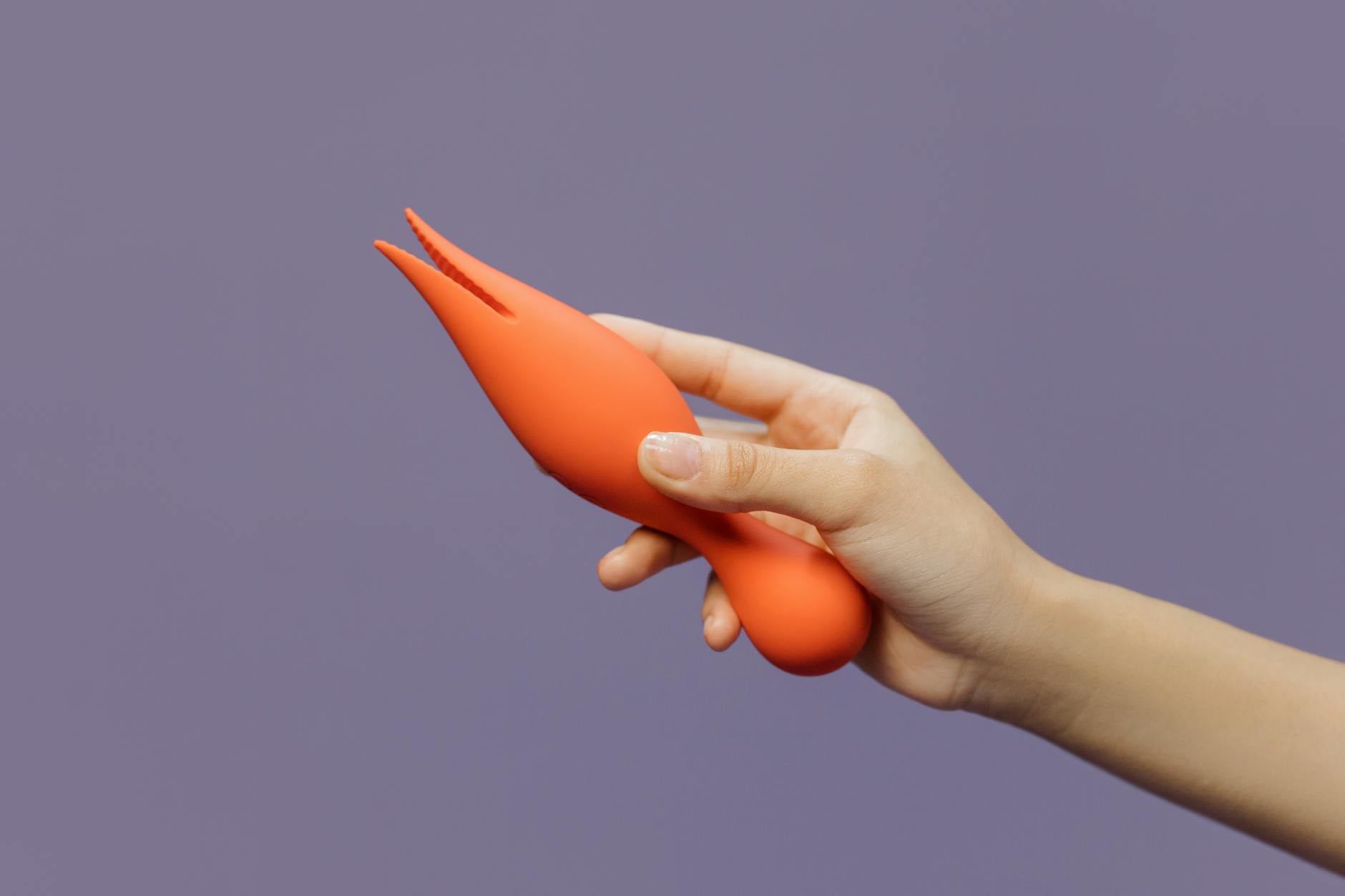
Here's the thing about starting late
You're not starting late. You're starting now, which is exactly when you should start. There's a wild myth that vibrator exploration is a thing for your twenties, that you're somehow behind if you're picking one up for the first time in your forties, fifties, or beyond. Ignore that entirely. Some of the most satisfied, adventurous people I work with discovered vibrators in their sixth or seventh decade. Your body isn't less capable now. It's just different. And different often means better.
Why your body responds differently than it did before
Let's get specific about what changes as you age. Estrogen levels shift (whether you're in perimenopause, postmenopause, or just moving through the natural arc of aging). This means the tissue around your vulva gets thinner and less naturally lubricated. Your nervous system also becomes more selective. You'll notice that generic, unfocused stimulation does basically nothing now, but the right kind of touch feels incredible in ways you might not have experienced when you were younger.
Arousal also takes longer to build. When I say longer, I mean budget thirty to forty-five minutes instead of ten. This isn't a flaw. It's actually an advantage because it means you're less likely to rush yourself, and you're more likely to tap into genuinely deep pleasure instead of surface-level sensation.
The clitoris itself doesn't age the way the rest of the body does. The nerve density stays intact. What changes is how blood flows to the area and how quickly your central nervous system registers stimulation. A lemon clitoral vibrator meets you exactly where this is true because it uses suction and pulsing instead of raw vibration, which means it works with your nervous system rather than against it.
Why suction feels different (and often better) than traditional vibration
If you've never used a vibrator before, you might assume all vibrators work the same way: they buzz. That's not quite right. Traditional vibrators use high-frequency oscillation to create sensation. A lemon sucker works differently. It uses gentle air-pulse technology that creates a suction effect, which stimulates the entire clitoral complex without the intense friction that can feel overwhelming on tissue that's shifted with age.
For people exploring vibrators later in life, this distinction matters enormously. Suction-based stimulation tends to feel less like "something buzzing against me" and more like "something drawing pleasure out of me." The sensation builds gradually rather than hitting you all at once. Your nervous system has time to register each layer of response.
Many of my clients who start vibrator exploration in their forties or beyond report that suction-based lemon vibrators feel the most natural, the least jarring compared to what their bodies already know. It's a gentler on-ramp to something new.
The warm-up matters more now
When you're younger, you can sometimes skip foreplay and still have a decent time. That changes. Your body needs proper warm-up to prepare the tissues, increase blood flow, and signal your nervous system that pleasure is happening.
I recommend starting with at least fifteen to twenty minutes of touch that has nothing to do with vibration. This can be partner touch if you have one, or your own hands. Think about what feels good elsewhere on your body. Some people find that gentle touch on the inner arms, neck, or breasts creates arousal that eventually spreads downward. Others need direct clitoral touch but slower and lighter than what might have worked before.
Then, once you feel that shift. that sense that your vulva is engorged and ready. introduce the lemon vibrator on the lowest setting. There's zero rush to turn it up.
How to actually start. pattern by pattern
When you first use a lemon clitoral vibrator, begin at setting one. Seriously. This is not conservative advice. This is actual neurological wisdom. Your nervous system will register stimulation at a lower intensity than you probably expect. Many people who are new to vibrators start higher out of doubt and end up overshooting into numbness.
Setting one on a lemon vibrator feels like a gentle rhythm against the area. Spend two to three minutes here. Notice what happens. Does it feel good? Too much? Just right? Move to setting two if one feels like nothing. Settings three through five gradually increase intensity and complexity of the pulse patterns.
Here's what's different about this from what someone younger might experience. you're not necessarily chasing the strongest sensation. You're chasing the pattern that makes your nervous system feel most alive. For some people, that's a medium setting with a specific pulse rhythm. For others, it's staying lower but for longer. Both are correct.
Solo exploration and presence
If you're starting vibrator exploration on your own, frame it as investigation rather than performance. You're not trying to have an orgasm. You're learning what your body actually likes right now, in this season of your life. That distinction removes the pressure that often sabotages pleasure.
Set aside real time for this. Not while you're thinking about dinner or scrolling with your phone in the other hand. One of the gifts of exploring pleasure later in life is that you often have fewer excuses to rush. Use that. Give yourself forty-five minutes. Spend thirty of them on warm-up and exploration with no vibrator at all.
When you introduce the lemon vibrator, notice what happens to your breath. Usually arousal shows up as a shift in breathing before it shows up as physical sensation. If you're holding your breath, you're probably tensing. Try breathing more deliberately. In for four, out for six. This activates your parasympathetic nervous system, which is where pleasure actually lives.
When you're with a partner
If you're exploring vibrators with someone, this is a conversation before it's an experience. Don't ambush them with a new toy. Say something like, "I want to explore vibrators. I'm curious about what a lemon clitoral vibrator feels like. Want to be part of this, or would you rather I explore solo first."
Many partners are relieved by this. It takes the pressure off them to be everything and also signals that this is about your pleasure, not about their performance.
If they want to be involved, they can hold the vibrator, which changes the experience entirely. There's an intimacy to having someone else direct the sensation. It also often means you're less likely to rush because another person's hand naturally creates a slower rhythm than you might use solo.
If they're hesitant, that's information too. Sometimes how to use a lemon vibrator when your partner avoids talking about sex is the real conversation that needs to happen first.
What pleasure actually feels like at this stage of life
Orgasms often change as you age. They might feel more localized. Less intense in some ways, but deeper in others. Some people report that they come less frequently but feel more satisfying when they do. Other people find they come more easily once they learn what their body actually responds to.
Here's what doesn't change. your capacity for pleasure. The nerve endings are still there. The brain is still capable of experiencing orgasm. Your body at forty-five, fifty-five, or sixty-five is not less capable of feeling good. It just requires you to understand it differently.
When you start using a lemon clitoral vibrator, you might not have an orgasm the first time. You might not have one for several sessions. That's completely normal, especially if you're exploring something new for the first time. The goal isn't the orgasm. The goal is the exploration, the feeling of being in your own body, the sensation of learning what you like.
Many people who start vibrator exploration later in life report that once they do have an orgasm with the vibrator, it feels revelatory. Not because vibrators are magical, but because they finally gave themselves permission to feel something intentional and focused.
Dealing with self-consciousness
This might be the biggest barrier, honestly. You've lived decades without a vibrator. Starting now can feel weird, awkward, or too late. That feeling is real and also completely separate from whether using a vibrator would actually feel good.
I often hear, "I feel silly," or "I'm too old for this." Here's my counter. You're old enough to know what you like. You're old enough to prioritize your own pleasure. You're old enough to stop apologizing for wanting to feel good. Those are the exact conditions that make vibrator exploration rich and uncomplicated.
If self-consciousness is genuinely blocking you, try this. Spend five minutes writing down the voice in your head that's saying you're too old or silly. Then write back to that voice as if you were talking to a friend. What would you tell her. Probably something kind. Tell yourself the same thing.
When to reach out for support
If you've tried using a lemon clitoral vibrator several times over a few weeks and you're experiencing pain, numbness, or complete absence of sensation, that's worth checking in with a doctor about. Not because vibrators are dangerous, but because pain and numbness often signal something else going on hormonally or neurologically.
If you're using a vibrator with a partner and it's creating tension or conflict, that's also worth addressing. Sometimes how to use a lemon vibrator when partners have different pleasure preferences is the thing you actually need to work through.
Most of the time, though, starting vibrator exploration later in life is straightforward. You're not broken. You're not behind. You're exactly where you're supposed to be. You're discovering something new, and your body is more than capable of meeting you there.
People also ask
Is it normal to not feel much the first time you use a lemon vibrator.
Yes, completely. Your nervous system is learning something new. That takes time. Many people feel subtle sensation the first time and more pronounced sensation after three or four uses. Patience here is actually an advantage because it means you're not forcing pleasure. You're letting it build naturally. Keep exploring at low settings and give yourself permission for the first experience to be about curiosity, not climax.
Why does the lemon vibrator feel less intense than other vibrators.
The lemon uses suction instead of traditional vibration. That means the stimulation is more diffuse and rhythmic rather than concentrated and oscillating. For many people, especially those exploring vibrators for the first time or anyone with sensitive tissue, this feels more comfortable and often more pleasurable. The sensation builds gradually instead of hitting hard. If you want to increase intensity, move through the settings systematically rather than jumping to the highest level.
Can I use a lemon vibrator if I have low libido.
Libido and sensation are different things. You might have low desire right now but still experience pleasure once something feels genuinely good. A lemon vibrator works with your body's actual capacity rather than against it. The slow warm-up, the gradual building sensation, and the focused stimulation often help people reconnect with pleasure even when desire feels flat. That said, low libido sometimes signals something hormonal or relational that's worth exploring separately, ideally with a healthcare provider or therapist.
How long should I use the lemon vibrator each session.
There's no standard answer. Some people enjoy fifteen minutes. Others find that forty-five minutes of exploration, including warm-up and vibrator time, feels right. Start with thirty minutes total and adjust based on what feels sustainable and pleasurable. More is not better. Presence is better. If you're checking the clock or feeling obligated, shorten it. If you're in a flow state and time disappears, stay with it.
What if I want to use it with a partner but I'm embarrassed.
Talk about it first in a non-sexual context. Don't bring the vibrator out and hope they get the hint. Say something straightforward. "I've been curious about exploring with a lemon vibrator. I'd like to try this. Would you want to be involved, or would you rather I explore on my own first.\