Let's talk about the long haul
Sensation comes back. But sometimes it takes longer than you want it to. Much longer. If you've been dealing with clitoral numbness for months—whether from medication, hormonal shifts, sustained stress, or accumulated overuse—you know the peculiar frustration of waiting for your body to wake up again. The impatience is real. So is the fear that maybe it won't.
Here's the part nobody frames clearly: sensation recovery isn't linear. There will be weeks where you notice a shift, then weeks where nothing changes. That's normal. And it doesn't mean you're doing anything wrong.
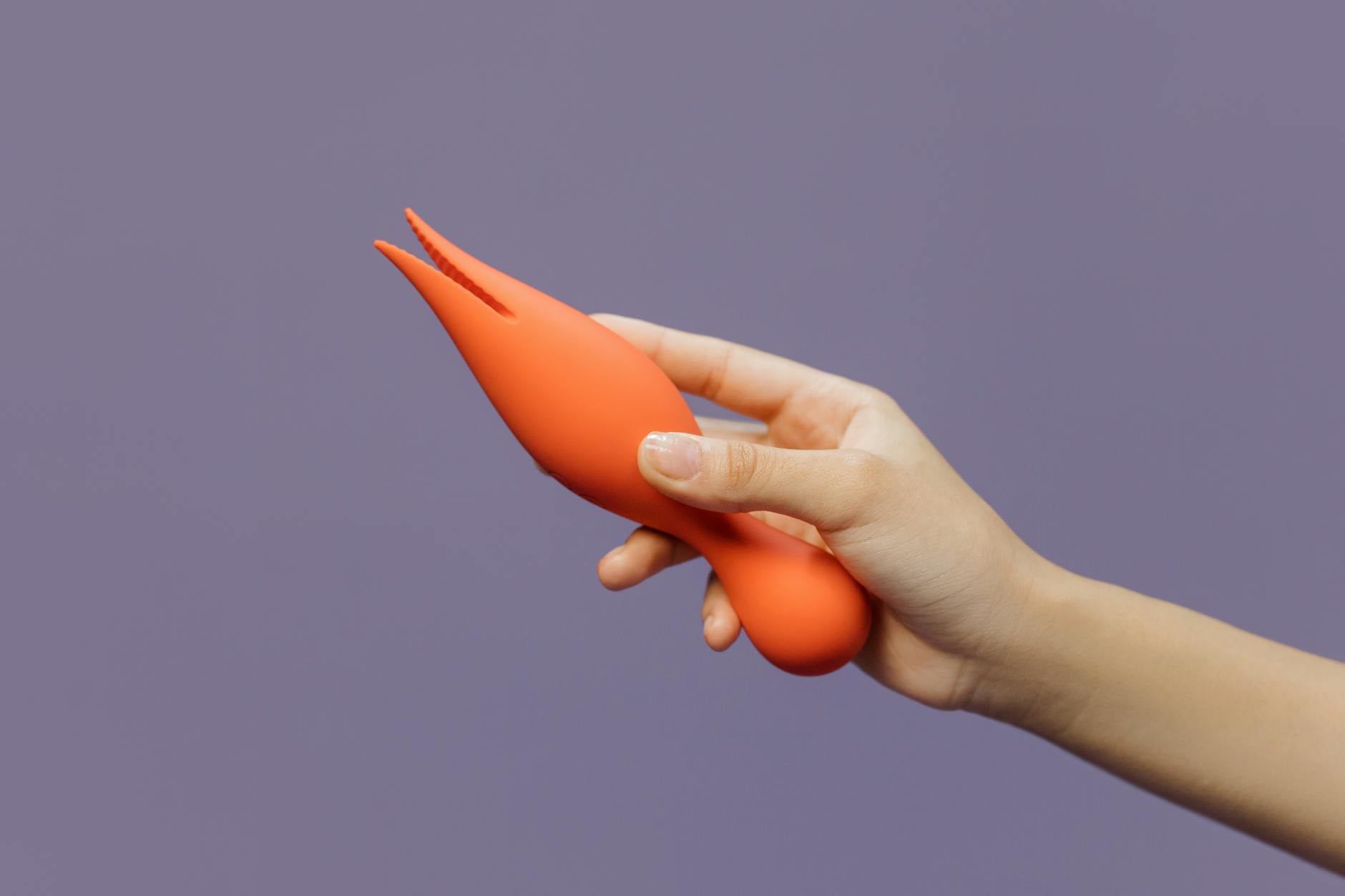
The role of a lemon vibrator in this timeline is specific. It's not a magic fix. But it's an excellent tool for maintaining consistent, gentle stimulation over months without the fatigue that comes from manual touch.
Why sensation numbness lasts longer than you'd think
Clitoral numbness usually happens for one of three reasons. Sometimes it's medication—antidepressants, birth control, or blood pressure drugs can all dull sensation for months after you start them. Sometimes it's hormonal: dropping estrogen during menopause, thyroid shifts, or insulin resistance all affect nerve sensitivity. And sometimes it's behavioral: if you've spent years using high-intensity vibrators or aggressive stimulation, the tissue can develop a kind of fatigue that takes time to resolve.
What makes recovery slow is that the clitoris has roughly 8,000 nerve endings packed into a small area, and those nerves need consistent, graduated stimulation to "remember" their job. You can't shock them back to life. You have to coax them.
Most people report the first real shift happens between week 4 and week 8 of consistent, gentle stimulation. But "consistent" is the key word. If you only use your lemon vibrator once a week, or you fluctuate between high and low intensity, the timeline stretches. If you're steady, the progress often compounds around month three or four.
Building a realistic month-by-month framework
Think of sensation recovery in quarters, not weeks.
Months 1-2: The "Am I feeling anything?" phase. You're building a baseline. Use your lemon clitoral vibrator 3-4 times per week for 10-15 minutes, always at the lowest intensity setting. Focus on consistency over sensation. You might feel nothing yet, and that's fine. You're training your nervous system to expect gentle touch on a schedule. Your brain is paying attention even if sensation isn't back.
Months 3-4: The micro-shift phase. You'll likely notice something small—a slight tingle, a faint pulse of feeling, maybe just a different texture of sensation than before. This is real. It's not your imagination. Document it somehow (even just a note in your phone) so you can see the pattern. It anchors hope. During this phase, you can start experimenting with patterns 2-3 on your lemon vibrator, but keep it brief. Five minutes at pattern 2 is enough.
Months 5-6: The acceleration phase. Sensation often starts returning more noticeably around month five or six. You might go from "I feel a little buzz" to "I can actually feel where the vibration is." This is when you can extend your sessions to 20-25 minutes and vary patterns more. Still avoid the high-intensity settings.
Months 7+: The integration phase. By month seven or eight, most people report meaningful sensation return. Not always 100 percent of baseline, but functional and pleasurable. This is where you can explore your lemon vibrator's full range without concern.
Honestly though, some people recover faster. Some take longer. Medications, age, and hormonal background all influence the timeline. The point isn't to hit these marks exactly. The point is to give yourself permission to think in months, not weeks.
The physiological reason lemon vibrators work for slow recovery
A lemon sucker-style vibrator like the Lem uses gentle suction and pulsing, not direct friction. That matters enormously for numb tissue. Direct vibration can actually be counterproductive when sensation is low because you can't feel the intensity adjustments and you're likely to lean toward higher power just to feel something. Then your tissue gets fatigued again.
Suction, by contrast, stimulates the tissue differently. It creates a gentle pull that wakes up nerves without the repetitive banging that leads to fatigue. The pulsing patterns on a lemon vibrator also allow for variety—you can switch between patterns to prevent habituation, which is when your nerves stop responding because the stimulus is too predictable.
For months-long recovery, this variety is essential. If you used the same pattern every day for six months, your nerves would adapt and sensation would plateau. Lemon vibrators with multiple patterns built in solve this problem elegantly.
What actually speeds up sensation recovery
Four things matter more than the tool itself.
1. Consistency over intensity. Three times a week at pattern 1 beats once a week at pattern 4. Your nervous system responds to regular, predictable input. Sporadic intense stimulation actually teaches your body to numb out faster.
2. Stress management. Chronically high cortisol suppresses sensation and slows nerve recovery. If you're in the middle of a stressful season, sensation recovery will stall. This isn't a failure. It's physiology. Sleep, movement, and whatever calms your nervous system matters as much as the vibrator.
3. Time of day and context. Morning sessions when you're less fatigued often feel more productive than evening. And using your lemon vibrator in a relaxed, private context—not rushed, not anxious—allows for better sensation awareness. Your brain can only process sensation when it's not in threat mode.
4. Lubrication. Even if you don't feel dryness, use a water-based lube from the first session. It reduces friction resistance and allows you to feel the vibration more clearly. It also protects tissue during the recovery window when sensation is delicate.
When to worry (and when not to)
If you're six months into consistent, gentle stimulation and you're seeing zero change, it's worth flagging with a healthcare provider. There's a small possibility the numbness has a neurological cause that needs different intervention. But for most people dealing with months-long numbness, the timeline I've described is realistic.
Don't compare yourself to partners or friends. Someone else's nervous system is not yours. Someone who regained sensation in six weeks was working with a different starting condition. That doesn't make your eight-month recovery a failure.
Also, be aware that sensation recovery often comes with weird phases. You might have a few days where sensation feels heightened and almost uncomfortable, then it settles back down. You might recover feeling on one side before the other. You might notice sensation in one type of touch (like pattern 3 on your lemon vibrator) before others. All of this is normal.
The partner conversation during long recovery
If you're navigating this with a partner, this is worth spelling out. "My sensation is coming back slowly" can sound like "I'm losing interest in you" if it's not contextualized. Be direct. Tell them the timeline, tell them it's not about desire or attraction, and tell them specifically what helps—whether that's reassurance, specific touch, or just them respecting your solo recovery time with your lemon clitoral vibrator.
Some partners want to be involved. Some don't. Neither is wrong. But clarity prevents resentment. And honestly, partners who understand that you're in a months-long recalibration with your own body are partners worth keeping.
FAQ: Sensation recovery and lemon vibrators
How often should I use a lemon vibrator if I'm trying to regain sensation?
Start with 3-4 times per week for 10-15 minutes in months one and two. By month three, you can increase to 4-5 times per week and extend to 20 minutes if sensation is improving. The goal is consistency, not frequency. Using it daily can actually slow recovery because you're not giving tissue time to reset between sessions.
Can I use a lemon vibrator on other parts of my body while waiting for clitoral sensation to return?
Yes. In fact, it's helpful. Using your vibrator on other sensitive areas—inner thighs, breasts, the perineum—keeps your nervous system engaged with sensation while your clitoris is recovering. It also prevents the psychological frustration of focused waiting. Pleasure doesn't have to be clitoral-specific.
Does alcohol or caffeine affect how quickly sensation returns?
Yes, both do. Alcohol suppresses nervous system sensitivity and dehydrates tissue. Caffeine can increase anxiety, which tightens the pelvic floor and reduces sensation awareness. If you're in active recovery, cutting back on both helps. You don't need to eliminate them, but moderation matters.
Is it normal to feel discouraged after three months with no change?
Completely normal. And it's also normal for sensation to suddenly shift in month four or five. Discouragement is actually often a sign you're at the edge of a breakthrough—your nervous system is working, even if you can't feel it yet. Journaling or noting small changes (even subtle ones like "today I felt warmth, not just buzz") helps you see progress you might otherwise miss.
Can pain during stimulation mean sensation is returning?
Not necessarily. If your tissue is recovering and overstimulated, you might feel discomfort. If you feel sharp or burning pain, dial back intensity and duration. Gentle, low-level discomfort (like a mild ache) sometimes happens during recovery. Sharp pain is your signal to slow down. There's a difference, and your body will tell you which one it is if you listen.
Should I switch vibrators during the recovery timeline?
No. Stick with one tool (like a lemon vibrator or lemon clitoral vibrator) for at least three months. Switching between tools every few weeks prevents your nervous system from building a clear stimulus-response pattern. Once you've hit month four or five and sensation is returning, you can experiment. But in early recovery, consistency with one tool matters.
The real timeline
Here's what I tell couples navigating sensation recovery: expect four to six months. Hope for three. Celebrate micro-shifts. And understand that your nervous system's timeline is not negotiable. You can't rush it. But you can absolutely support it with the right tool, the right rhythm, and the right patience.
A lemon vibrator is part of that support. It's not the whole picture. But for someone in a months-long rebuild, it's a remarkably useful one. Gentle, patterned, consistent stimulation is exactly what recovering nerves need.
Your sensation will return. The waiting is the hardest part. But the waiting is also where you learn to trust your body again. That trust is worth the months.
Ready to start? Check out our guide on how to use a lemon vibrator when you don't know where to start for foundational setup. And if stress is part of your equation, our piece on how to use a lemon vibrator when anxiety blocks arousal walks through nervous system reset tactics that pair well with long-term sensation recovery.