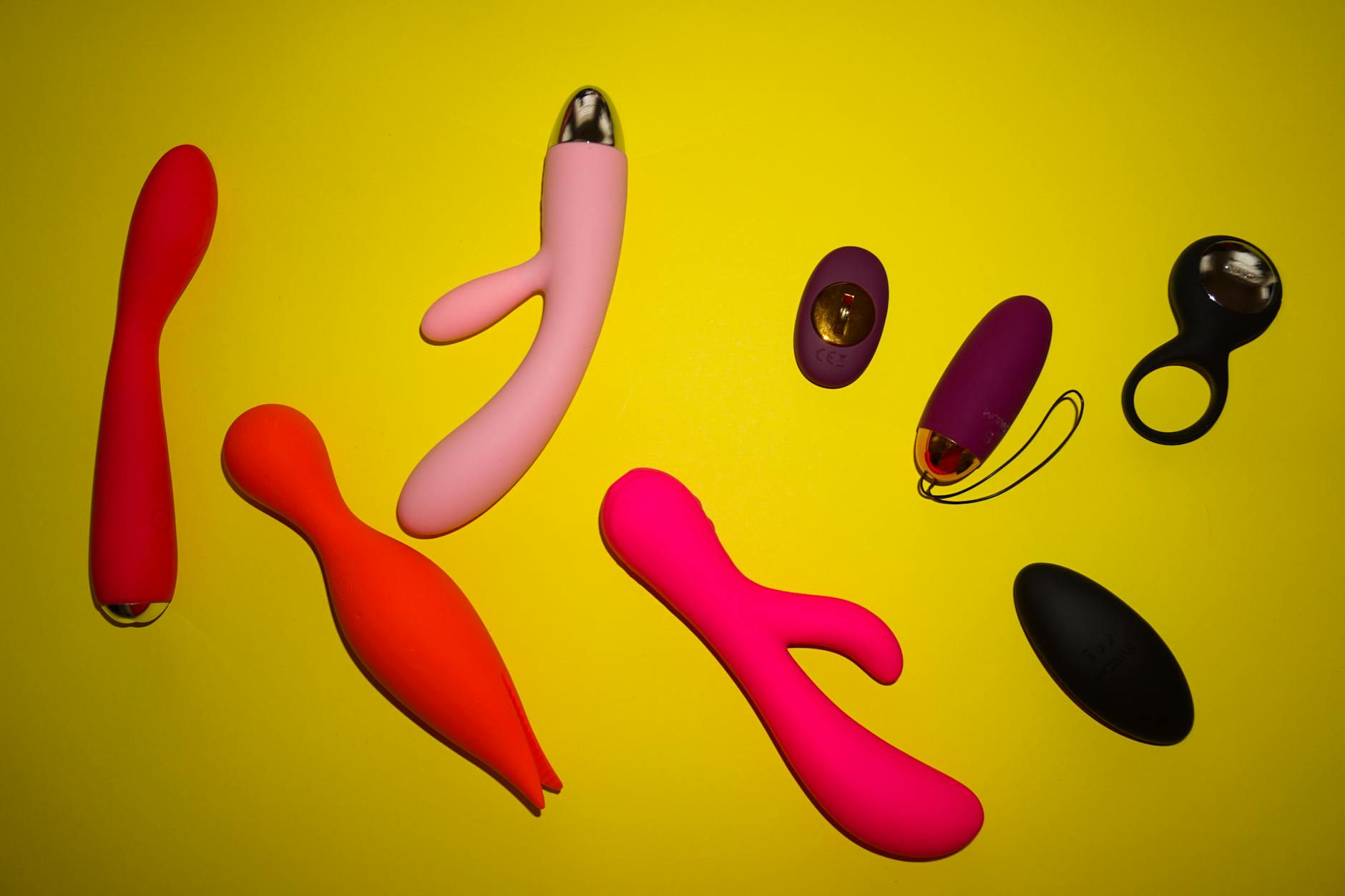
The desire gap is real and it's not your fault
Let's be honest: mismatched desire is one of the oldest relationship problems, and it's wildly common. One partner wants sex twice a week, the other once a month. One initiates constantly, the other waits to be invited. One fantasizes daily, the other has stopped thinking about it altogether. And here's the brutal part. The higher-desire partner feels rejected. The lower-desire partner feels pressured. Both feel alone.
Most couples handle this by choosing one of three bad paths: pretending it doesn't matter, having a guilt-driven quickie that satisfies no one, or avoiding the conversation entirely and letting resentment build. But there's a fourth option, and it starts with understanding that desire mismatch isn't a character flaw in either person. It's a compatibility puzzle that needs a different kind of solution.
A lemon vibrator can absolutely be part of that solution. But first, you need to understand what it actually does.
Why the desire gap happens in the first place
Desire mismatch isn't random. It usually lands in one of these buckets: stress load (the higher-stressed partner has lower desire), hormonal shifts (especially around cycles or after major life events), emotional disconnection, medication side effects, or simply different baseline drives that have nothing to do with how much someone loves you.
Here's what I tell couples in my practice: your desire levels aren't a referendum on your relationship. They're information. The gap tells you something about what each of you needs right now, but it doesn't tell you anything about your partner's love or your compatibility. That distinction matters because most couples interpret the gap as a threat when it's actually just a signal.
The lower-desire partner often feels shame. "What's wrong with me that I don't want what my partner wants?" The higher-desire partner interprets rejection as unlovingness. Both conclusions are wrong, and both make the gap bigger.
The lemon vibrator's actual role
A lemon vibrator does three things in a mismatched-desire dynamic:
It decouples your pleasure from your partner's availability. If the lower-desire partner isn't in the mood for partnered sex, that doesn't mean the higher-desire partner has to white-knuckle through abstinence. Solo play with a lemon vibrator is full, legitimate pleasure. It doesn't replace partnered sex, but it means you're not waiting around like a rejected teenager. You're tending your own garden.
It gives the lower-desire partner an entry point that doesn't feel like intercourse. Some people have lower desire for penetrative sex but higher interest in external clitoral stimulation. Or they have low desire when they're stressed but feel interested once they're actually aroused. A lemon vibrator lets them experiment without the full commitment of partnered sex. It's lower stakes. It feels different. Sometimes that difference unlocks something.
It creates a conversation that doesn't center on blame. Instead of "You never want to have sex," the conversation becomes "I found something that feels interesting. Want to explore it together, or should I enjoy this solo?" That's a completely different vibe. It's curious instead of accusatory.
The conversation you need to have before you bring a toy into this
Here's the trap most couples fall into: the higher-desire partner buys a lemon vibrator, presents it hopefully, and the lower-desire partner hears, "You're not enough, so I bought this." That's not what was meant, but shame hears what it wants to hear.
Start differently. The conversation should happen outside the bedroom and outside a sexual moment. It might sound like: "I've been thinking about the gap between what we each want sexually. I don't think there's anything wrong with either of us, but I think we both feel stuck. I want to find a way that works for both of us, and I read that some couples use toys to take pressure off and actually enjoy sex more. Would you be open to exploring that together, or would you rather I explore solo and tell you about it?"
Notice what that does: it names the real problem, removes blame, offers choice, and respects autonomy. The lower-desire partner isn't being ambushed. They're being invited.
Some partners will say yes to exploring together. Some will prefer solo play. Some will say "Not yet, but maybe later." All of those are legitimate answers. The point is that you're asking, not assuming.
Using a lemon vibrator when you have different desire timelines
One of the sneaky benefits of lemon clitoral vibrators is that they work on a completely different timeline than partnered sex. Partnered sex requires matching arousal, matching availability, matching mood. A lemon vibrator works whenever the solo partner is ready. No negotiation required.
If the higher-desire partner uses a lemon vibrator solo, they're getting actual pleasure, not settling. That matters psychologically. It means they're not sitting around resentfully waiting for sex. They're actively choosing pleasure instead of passively waiting for permission.
For the lower-desire partner, watching a partner enjoy themselves with a lemon vibrator sometimes actually increases interest. Not because they feel obligated, but because pleasure is contagious. Seeing someone you love having fun can shift the entire tone.
The key is that it stays voluntary. If the lower-desire partner ever feels like they're being pressured to participate, the whole thing backfires.
When a lemon vibrator becomes partnered play
Sometimes mismatched desire softens when the low-desire partner doesn't have to do the emotional or physical labor of traditional sex. A lemon vibrator lets them be present without performing. They can watch, touch, participate at their own pace, or just be in the room while their partner uses it solo. None of those require the full commitment that penetrative sex demands.
Some couples find that this actually reignites interest. The lower-desire partner starts noticing their own arousal. Or they realize they enjoy being present during their partner's pleasure, even if they're not the one being stimulated. That's a real shift, and it usually only happens when there's zero pressure.
Other couples discover that the lower-desire partner has a specific type of stimulation that works better than partnered sex. Maybe they're more responsive to external clitoral vibration than anything else. Maybe they need a longer warm-up than feels natural with a partner. A lemon vibrator lets them figure that out without embarrassment or pressure.
The emotional work still matters more than the toy
Here's what I need to say clearly: a lemon vibrator is not a marriage fix. It's a tool that works when you're also doing the real work, which is talking. The conversations about desire, stress, connection, and what each of you actually needs are the heavy lifting. The vibrator just makes those conversations easier because you're not coming from a place of rejection and shame.
If the underlying dynamic is "You don't want me," a lemon vibrator doesn't fix that. You have to actually address the disconnection. Is there unresolved anger? Are you stressed and touched out? Is there infidelity or trust damage? Is one partner carrying way more of the household load? Sometimes the desire gap is actually a symptom of those bigger problems, and a lemon vibrator won't touch any of it.
But if the core relationship is solid and you're just stuck on the mechanics of different desire levels, a lemon vibrator can absolutely be part of the solution.
How to actually introduce this without sabotaging the conversation
Timing matters. Don't bring it up during an argument about sex. Don't bring it up right before bed when you're hoping for sex. Bring it up over coffee on a random Tuesday, when there's no sexual agenda.
Frame it as curiosity, not as desperation. "I've been reading about how some couples use toys, and I'm wondering if that's something we'd ever want to try." Notice the if. You're not assuming yes. You're genuinely checking.
Be prepared for hesitation. The lower-desire partner might say, "I feel like you're saying I'm not enough." This is where you get to be really clear: "No. I love having sex with you. And I also want to find ways that work for both of us instead of one of us feeling left out. This isn't about you being not enough. It's about finding more ways to feel connected." Say it and mean it.
If they say no, respect that. You can revisit it later, but not if the first conversation felt pushy. Trust builds slowly.
If they say yes, start with information. Read about how lemon vibrators actually work. Look at the different settings together. Talk about what each of you imagines. Make it collaborative instead of one person deciding and the other adapting.
When desire mismatch is actually about something else
Sometimes lower desire isn't lower desire at all. It's lower attraction, lower trust, or lower emotional safety. If that's what's happening, a lemon vibrator won't fix it. You need a couples therapist or a serious conversation about whether the relationship is meeting both of your needs.
Same if one partner is checked out entirely or if there's an affair. Those aren't toy problems. Those are relationship problems that need real intervention.
But if the connection is solid and you're just stuck in a pattern where one person wants sex more than the other, and both of you are willing to figure out a rhythm that works, a lemon vibrator can genuinely help. It takes pressure off. It creates options. It makes pleasure feel possible instead of impossible.
FAQ: Navigating desire mismatch with a lemon vibrator
Will using a vibrator make my partner want sex more?
Maybe. Sometimes the lower-desire partner discovers they're actually interested once there's no performance pressure. Sometimes they enjoy the new dynamic. But sometimes they don't, and that's okay too. The goal isn't to change your partner's desire level. It's to find a way both of you feel satisfied instead of one person being perpetually frustrated. If using a lemon vibrator helps that, great. If it doesn't shift desire, at least you're both getting something out of it.
What if my partner feels replaced by the vibrator?
That's usually about insecurity, and it's real. You might need to explicitly say: "This isn't about replacing you. It's about me having options when you're not interested." Then show them through actions. Make sure partnered sex is still a priority when it happens. Make sure you're not choosing the vibrator over your partner. The vibrator is a tool for the times when your partner isn't available, not a substitute when they are.
How do I bring up mismatched desire without it turning into an argument?
Pick a neutral time and place. Use non-blaming language. Say "We have different desire levels" instead of "You never want sex." Focus on what you both want instead of what's wrong. Avoid bringing it up when you're already frustrated about sex. Give your partner time to process instead of expecting an immediate answer. Most importantly, listen to what they're really saying. Sometimes lower desire is about stress. Sometimes it's about feeling disconnected. Sometimes it's legitimate disinterest, and that's a different conversation.
Can a lemon vibrator help if we're in couples therapy already?
Absolutely. Run it by your therapist, but in most cases, using toys as part of rebuilding intimacy is completely compatible with therapy. It might actually help you have better conversations because you're experimenting together instead of talking in circles about what's wrong. Just make sure you're both actually using it and enjoying it, not just one person pushing the other to participate.
What if my partner wants to use a vibrator but I don't?
Let them. You don't have to be involved. If it makes you uncomfortable, figure out why. Is it jealousy? Is it about feeling like something you're not providing? That's worth exploring, maybe with a therapist. But your partner using a lemon vibrator solo has nothing to do with you or your attractiveness. They're just taking care of their own pleasure, same as you might masturbate solo. Different tools, same idea.
How do we know if mismatched desire is fixable or if we're just incompatible?
That depends on whether both of you actually want to solve it. If one person is checked out and doesn't care about the gap, it's hard to bridge. If both people are genuinely trying to find a way that works, you're usually fine. Sometimes a tool like a lemon vibrator helps by taking pressure off. Sometimes you need a therapist to help you understand what's really driving the mismatch. And sometimes you discover you're just too different and that's okay too. Not every relationship survives, but most mismatched desire problems that have willing partners on both sides can shift.
The real benefit is permission, not pressure
Honestly, the biggest shift I see when couples bring a lemon vibrator into a mismatched desire dynamic isn't about the toy itself. It's about permission. The lower-desire partner often feels guilty. The higher-desire partner often feels rejected. A vibrator gives both of you permission to have pleasure without that loaded history.
The lower-desire partner can explore their own interest in their own time. The higher-desire partner can have actual pleasure instead of resentful abstinence. And both of you get to stop interpreting the other's body as a referendum on your relationship.
If you're stuck in this dynamic and you want to shift it, start with the conversation. Not with the toy. The toy only works if you're both actually interested in solving the problem together. But if you are, a lemon vibrator can absolutely be part of the answer. It's not magic. It's just a tool that makes it easier to talk about something that's been really hard to talk about.
If you're not sure where to start, or if the conversation keeps getting stuck, reach out. There's no shame in getting help navigating this.