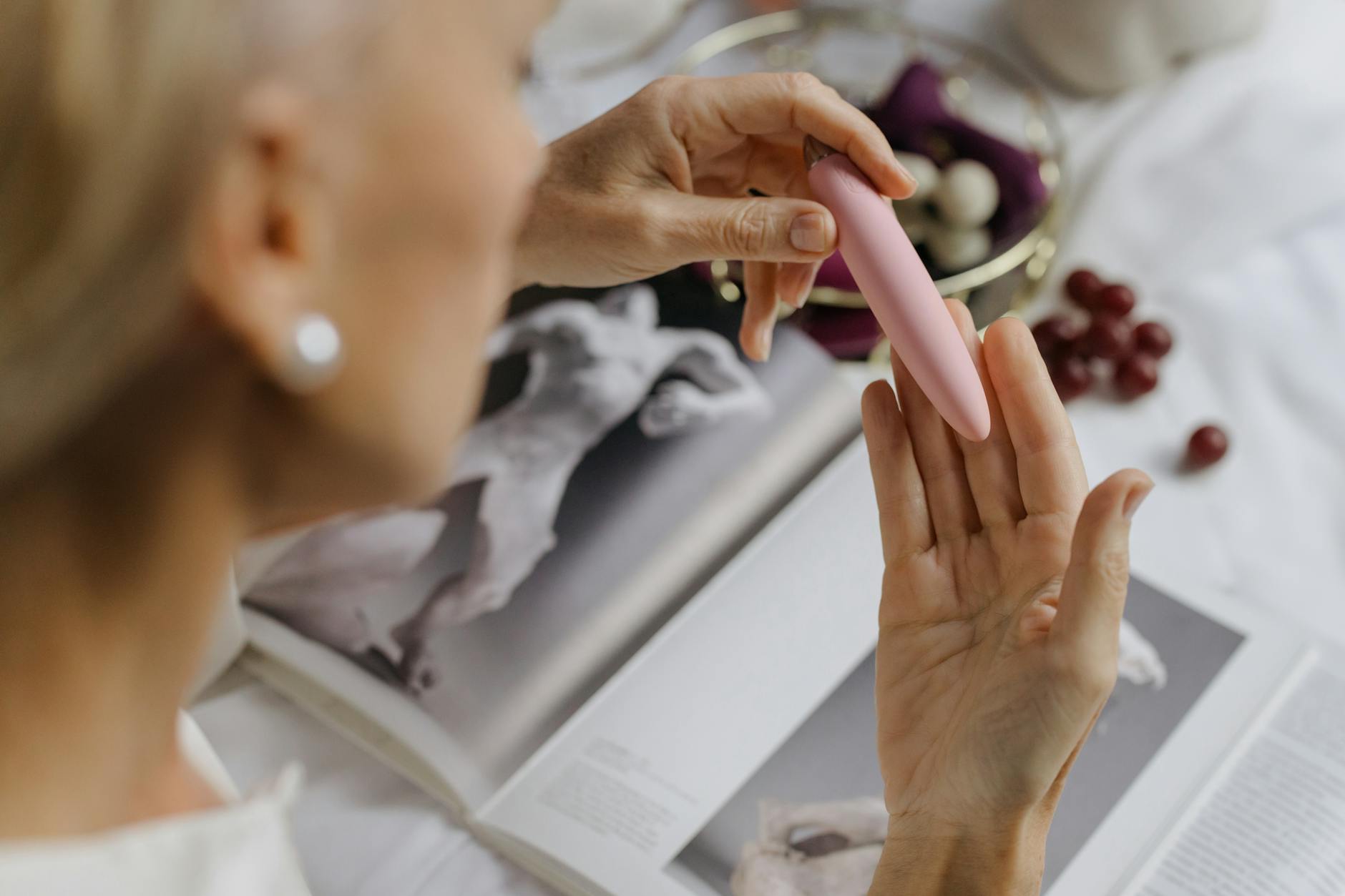
Here's the thing about different pleasure styles
I've sat across from countless couples who describe the same dynamic. One partner needs what I call "the long build." They want slow, sustained sensation that deepens over time. The other needs intensity right away. They want something that delivers fast, concentrated stimulation and gets to the point. Neither is right. Neither is wrong. But together, they can create friction that has nothing to do with pleasure.
The usual script goes like this. Slower partner: "You're always rushing." Faster partner: "You take forever." Both feel unseen. Both feel wrong in their own body. Within a few months, sex becomes something you schedule or avoid rather than something you share.
Why pleasure styles don't match the way we think they do
We assume pleasure preference is about libido. It's not. Libido is desire frequency. Pleasure style is sensation preference. They're separate systems that happen to overlap, which is why we confuse them constantly.
Pleasure style is shaped by a few things. How your nervous system responds to input. How you learned pleasure was supposed to feel (often through porn, partner feedback, or your own earliest explorations). How stimulated or depleted you are on any given day. Whether you trust the person you're with. And honestly, timing. The same person who wants slow, building pleasure on Tuesday morning might want something faster and more direct on Friday night.
The problem is that when pleasure styles clash, most couples assume one person needs to change. The faster person tries to slow down. The slower person tries to speed up. Both end up performing rather than feeling. Performance kills the actual experience.
How lemon vibrators change the equation
Here's where clitoral vibrators like the lemon vibrator enter. They're not a compromise tool. They're a translator.
A good clitoral vibrator does something neither partner alone can do consistently. It delivers sensation at a speed and intensity that doesn't depend on your partner's arousal timing, their energy level that day, or how long they can sustain effort. It's predictable in a way fingers, friction, or even penetration can't be.
This solves three problems at once.
First, it removes the pressure from the slower partner. If you're someone who needs 20 minutes of build-up, you can use a lemon vibrator and start building while your partner is still warming up. You're not asking them to spend 20 minutes doing something they're naturally faster at. You're using a tool that matches your pace.
Second, it removes the resentment from the faster partner. They're not sitting there restraining themselves or feeling like they're doing it wrong. They're participating in pleasure that's happening at the right speed for everyone.
Third, it creates a shared experience. You're not taking turns. You're both engaged, both present, and both getting what you actually need.
The pleasure styles that clash most often
I see four patterns repeatedly. None of them are problems. They become problems only when one person expects the other to perform against their natural wiring.
The peak-and-hold versus the slow-build. One person wants sensation to plateau quickly and stay there. The other wants gradual intensification. Using a lemon clitoral vibrator on the slower-building partner while the other is present keeps both of you in sync.
The external-only versus the mixed. One partner comes most reliably from external stimulation. The other needs penetration, internal pressure, or a combination. A lemon vibrator gives the external-focused person their primary pleasure without requiring the other person to sustain something that doesn't work for them.
The consistency seeker versus the variation lover. One person needs the same rhythm, pattern, or pressure repeatedly. The other gets bored doing the same thing. A vibrator offers predictable stimulus for one partner while the other partner can stay engaged and present in different ways.
The solo versus the partnered. One person orgasms easily alone but struggles with a partner present. The other orgasms more reliably with partnership. Neither is "broken." A lemon vibrator can help the solo-pleasure person access their body while still being intimate with their partner.
How to actually use this
The first conversation shouldn't be about the vibrator. It should be about pleasure styles without judgment. "What speed of stimulus feels best to you?" "Do you prefer consistent rhythm or variation?" "What time of day do you respond best?" "How much warm-up do you need?" Write down the answers. You might find they're not about incompatibility. They're about different nervous systems.
Then introduce a clitoral vibrator like the lemon vibrator not as a fix but as a tool that helps both of you get what you actually need. The frame matters. "This isn't about me not being enough. This is about us both getting our actual pleasure."
When you're using it together, the partner not using the vibrator can stay engaged through touch, kissing, conversation, or their own pleasure. There's no rule that says one person has to be passive. You're just outsourcing the specific sensation that works best for one of you.
Start at lower intensities and patterns. Many lemon vibrators have multiple settings. Explore together. Ask what feels good. The slower-building partner might need to start at pattern 1 or 2. The intensity-seeking partner might jump to 3 or 4. Both are right.
When pleasure style differences actually signal something else
Sometimes what looks like a pleasure style clash is really tension you're carrying into the bedroom.
If one partner consistently wants fast, intense sensation and avoids slowing down, they might be using sex to discharge stress rather than connect. If the other partner always wants slowness and connection and resists intensity, they might be protecting themselves from vulnerability or afraid of being seen.
A vibrator won't fix that. Therapy will. But a vibrator can make the physical experience work while you're addressing the emotional piece.
If pleasure styles feel less like "different nerves" and more like "one of us doesn't want to be here," that's a different conversation entirely. Mismatched pleasure styles are solvable. Mismatched desire to be intimate isn't fixed by buying a tool.
The actual benefit no one talks about
Here's what happens when you stop forcing your partner's pleasure style to match yours. The pressure lifts. Sex stops being negotiation and becomes play. You get curious about each other instead of frustrated. You realize that different doesn't mean wrong.
I've had couples tell me that using a lemon vibrator together was the first time they actually felt seen during sex. Not because the vibrator was magic. But because they finally stopped trying to be someone they're not.
That's the real intimacy. Not that you're doing the same thing. But that you're both getting what you actually need.
FAQ
How do I bring up using a vibrator with my partner without making them feel inadequate?
Frame it as addition, not replacement. "I've been thinking about exploring something together that might help us both feel better" is different from "I need this because you're not enough." Start with curiosity, not criticism. Ask what they want before you suggest anything. If they say no, that's real data. If they say yes with hesitation, go slowly.
Can using a vibrator make one partner become dependent on it?
No. Pleasure variety doesn't create dependency. In fact, using different tools and techniques often expands your pleasure capacity rather than narrowing it. Your body doesn't "forget" how to feel sensation from other sources because you've used a vibrator. The brain doesn't work that way.
What if we have opposite pleasure styles but one of us doesn't want to use a vibrator?
Then you're back to the original problem. A vibrator isn't a workaround for unwillingness to compromise. It's a tool for when both people want to meet their own needs without forcing their partner to perform in a way that doesn't fit them. If one partner refuses any tool or adaptation, that's worth exploring in a couple's setting.
Is it normal for pleasure styles to change over time?
Completely normal. Stress, age, hormones, relationship dynamics, medication, trauma, healing, all of these shift how your nervous system responds to stimulus. What worked five years ago might not work now. That's not a problem. It's just information. Check in with your partner regularly about what's working.
How do I know if we have a pleasure style mismatch or just low chemistry?
Chemistry is what happens when you're both comfortable and present. Most "low chemistry" is actually discomfort, fear, or misalignment that hasn't been named. If you can talk about pleasure without shame and explore together without pressure, chemistry usually shows up. If it doesn't, then you have real data. But most couples don't give themselves that chance before they assume it's a chemistry problem.
Can lemon vibrators help if both partners have the same pleasure style?
Absolutely. Even when pleasure styles match, a clitoral vibrator gives you predictability and consistency. How Lemon Vibrators Help When Sensation Feels Dulled by Routine explores how variation within similar preferences actually deepens pleasure rather than making it stale.
What comes next
Different pleasure styles aren't a relationship problem. They're just information. The couples who handle them best aren't the ones who naturally match. They're the ones who got curious instead of defensive.
A lemon vibrator can be part of that conversation. It's a tool that says "I want you to feel good in your own body, and I want to feel good in mine, and we can both have that." That's not compromise. That's multiplication.
If you're ready to explore this together, start with curiosity. Ask your partner what they actually want. Listen without fixing. Then see what tools might help you both get there. Your pleasure styles don't have to match. But your commitment to each other's pleasure does.